

















Glide, Don’t Splash: Front Crawl Technique for Smoother Laps, Babe
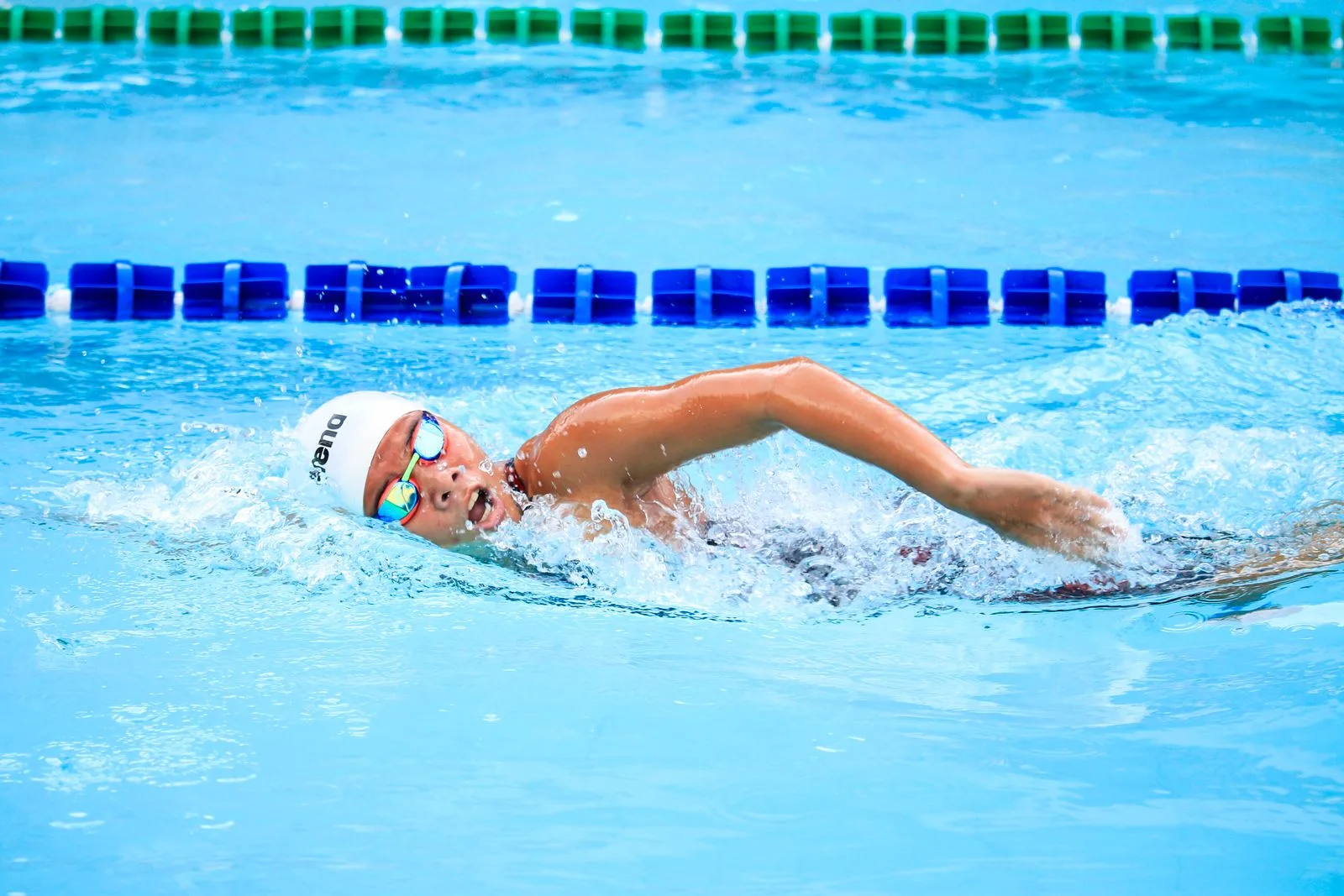
Babe, front crawl is the stroke everyone thinks they know, until they try to swim four lengths in a row and arrive at the wall gasping like a stranded fish. Brad here, and the secret is not more effort. It is better technique. Smooth front crawl looks lazy, feels relaxed and moves you through the water like a dream. Let’s fix your freestyle.
Body Position: Be Long and Flat
Imagine your body as a long, sleek boat. If your hips and legs sink, you are dragging an anchor behind you.
- Keep your face looking down at the bottom of the pool, not forward.
- Press your chest gently into the water. This lifts your hips towards the surface.
- Squeeze your core lightly, like you are bracing for a friendly poke in the stomach.
Rotation: Swim on Your Sides
Good swimmers do not stay flat like a plank. They roll from side to side with every stroke, a little like a rotisserie chicken (the most glamorous image we could find, babe).
- Rotate your shoulders and hips together, about 30 to 45 degrees each way.
- Rotation lets your big back muscles do the work instead of tiring out your shoulders.
- It also makes breathing much easier, because your mouth is already closer to the surface.
The Arm Stroke, Step by Step
- Entry: your hand enters the water in front of your shoulder, fingertips first, not across the middle of your head.
- Reach: extend the arm forward under the surface, as if grabbing something on a high shelf.
- Catch: bend the elbow and point your fingertips towards the pool floor, so your forearm acts like a paddle.
- Pull: push the water back past your hip.
- Recovery: lift the elbow out first and swing the relaxed arm forward to start again.
A simple cue: high elbow under the water, relaxed hand above it.
Breathing Without Panic
Breathing is where most beginners fall apart. Here is how to make it calm.
- Exhale under water. Blow bubbles steadily through your nose and mouth while your face is down. If you hold your breath, you will try to exhale and inhale in one rushed moment.
- Turn, don’t lift. Rotate your head with your body so one goggle stays in the water. Lifting your head makes your legs sink.
- Bilateral breathing. Breathing every three strokes means you breathe to both sides. It keeps your stroke balanced and your neck happy. If that feels like too much at first, breathe every two strokes and switch sides each length.
The Kick: Small and Steady
Your kick is mostly for balance, not speed.
- Kick from the hips with nearly straight legs and soft knees.
- Keep the kick compact, with feet just breaking the surface.
- Point your toes like a dancer. Floppy feet act like brakes.
Drills That Make It Click
- Catch-up drill: one arm waits in front until the other hand touches it. Great for timing and length.
- Six-kick switch: kick on your side for six kicks, then take one stroke to roll to the other side.
- Fist swimming: swim with closed fists for a length. When you open your hands again, you will feel your forearm doing the work.
- Kickboard breathing: hold a board and practise turning your head to breathe without lifting.
A Simple Session
Warm up with four easy lengths. Then do four rounds of one length of a drill followed by one length of full front crawl, resting 30 seconds between rounds. Finish with two slow, relaxed lengths, focusing on long strokes and calm bubbles.
Be Patient With Yourself
Swimming is a skill, not just fitness. Even strong gym guys feel clumsy in the pool at first. A lesson or two with a coach can speed things up enormously, and filming yourself on a phone from the poolside, with permission, shows things you cannot feel.
Long, smooth, relaxed. That’s the freestyle glow-up, babe. Now go glide those laps, and then, of course, we gotta order more protein.
Comments
Also give your opinion.

 The Captain Look
Leave a comment