

















Pull Together, Babe: The Beginner’s Guide to Rowing on Real Water
 By Brad Damon
Hey, sunshine! You’ve conquered the rowing machine at the gym, and now you’re staring out at the water wondering what it feels like for real. Spoiler: it’s even better. Gliding across calm water at sunrise in a sleek little boat is a full-body workout with a view, and it’s open to total beginners. Gotta order more protein, because your back is about to get gorgeous.
Sculling vs Sweep Rowing
There are two styles, and you’ll hear both words at any club:
- Sculling: each rower holds two oars, one in each hand. Single sculls (one person) and double sculls (two people) are the classic beginner boats.
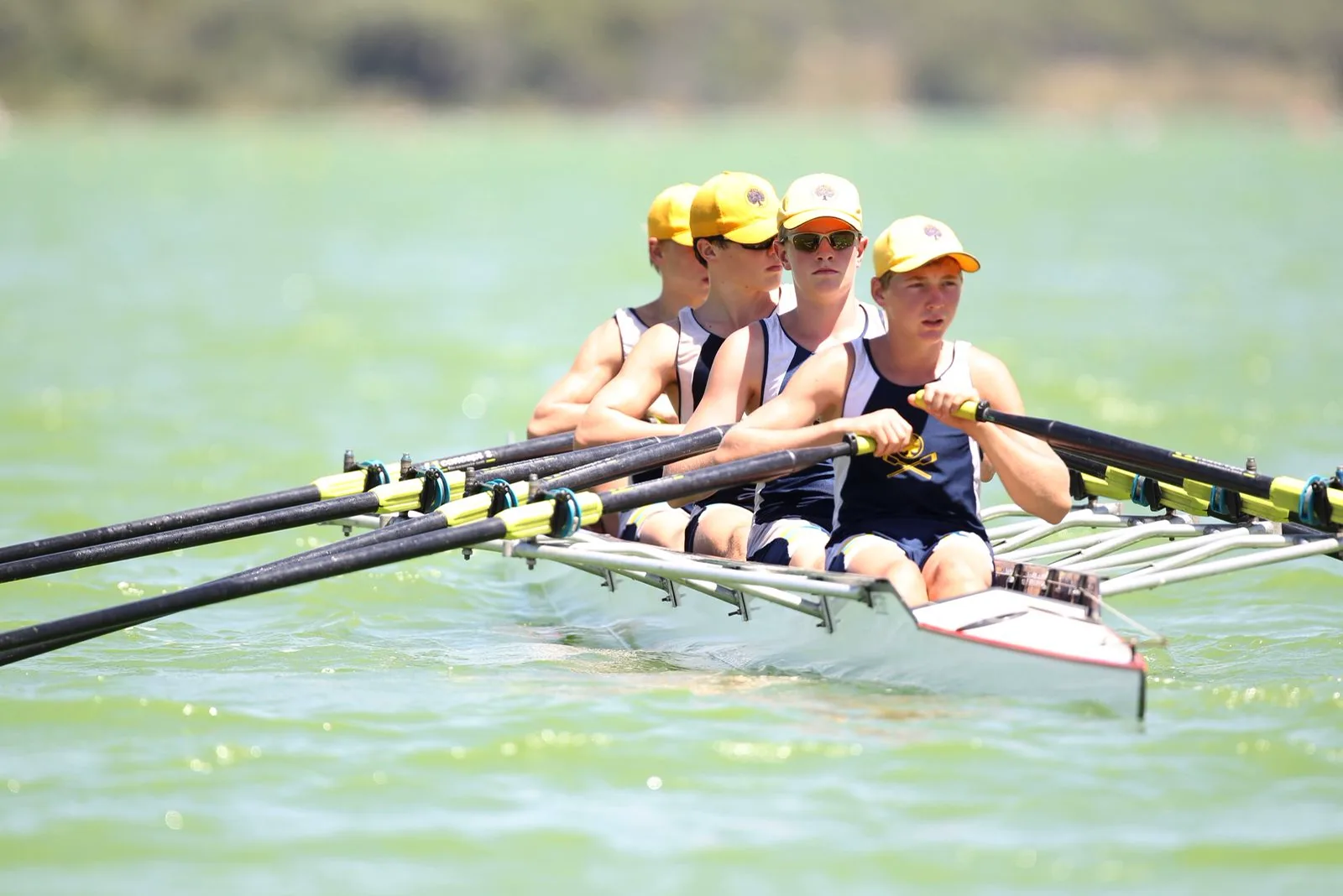
- Sweep rowing: each rower holds one oar with both hands. Think of the big crews of four or eight you see racing.
Most learn-to-row courses start you in a stable, wider training boat, then move you into doubles, quads or small crews. No one throws you into a racing single on day one, promise.
What a Learn-to-Row Course Looks Like
Rowing clubs usually run short beginner courses over a few sessions. A typical first day goes like this:
- Safety talk on the dock: how to get in and out, what to do if you tip.
- Rowing machine practice to learn the basic stroke on dry land.
- Carrying the boat to the water with your crew. Teamwork starts here.
- First strokes in a stable boat, with a coach beside you in a launch.
You’ll need to be comfortable swimming, and most clubs ask you to do a short swim test.
The Stroke, Step by Step
On the water the stroke has the same four parts you know from the machine, just with more grace:
- The catch: knees bent, arms long, blades drop cleanly into the water.
- The drive: push with your legs first, then swing your back, then pull with your arms. Legs, body, arms.
- The finish: blades come out, handles close to your ribs, shoulders relaxed.
- The recovery: arms away, body forward, slide back up slowly. This slow slide is where balance happens.
The secret to a smooth boat is rhythm, not power. Rush the recovery and the boat wobbles. Take your time and she glides.
Why It’s Such a Great Workout
Rowing works around most of your major muscles in one go: legs, glutes, back, shoulders, arms and core, plus a big cardio boost. It’s low-impact on the joints, so it’s kind to knees and ankles. And because you’re outside on the water, an hour flies by far faster than on any machine.
What to Wear
- Fitted clothes: loose shorts and baggy shirts catch on the seat and oars. Lycra or close-fitting shorts and a snug top are best.
- Layers you can peel off as you warm up.
- Sunglasses and sun cream: water reflects a lot of sunshine.
- A cap to keep the glare out of your eyes.
- A water bottle that fits in the boat.
Blisters and Balance
Fresh hands often get little blisters at first. Relax your grip, hold the handles with your fingers rather than squeezing, and let your skin toughen up gradually. As for balance, keep your hands level and your weight centred. A few wobbles are completely normal.
Joining the Crew
Rowing clubs are famously social. Early sessions, shared boats and post-row breakfasts build friendships fast, and many cities have inclusive and LGBTQ+ friendly clubs. Ask about social rowing groups if racing isn’t your thing.
Sunshine and pop divas, babe, and now sunshine and oars. Grab a seat in the boat, find your rhythm and enjoy the glide.
Comments
Also give your opinion.

 The Captain Look

Leave a comment