

















Sear, Rest, Slice: The Bear’s Guide to Cooking a Perfect Steak, Cub
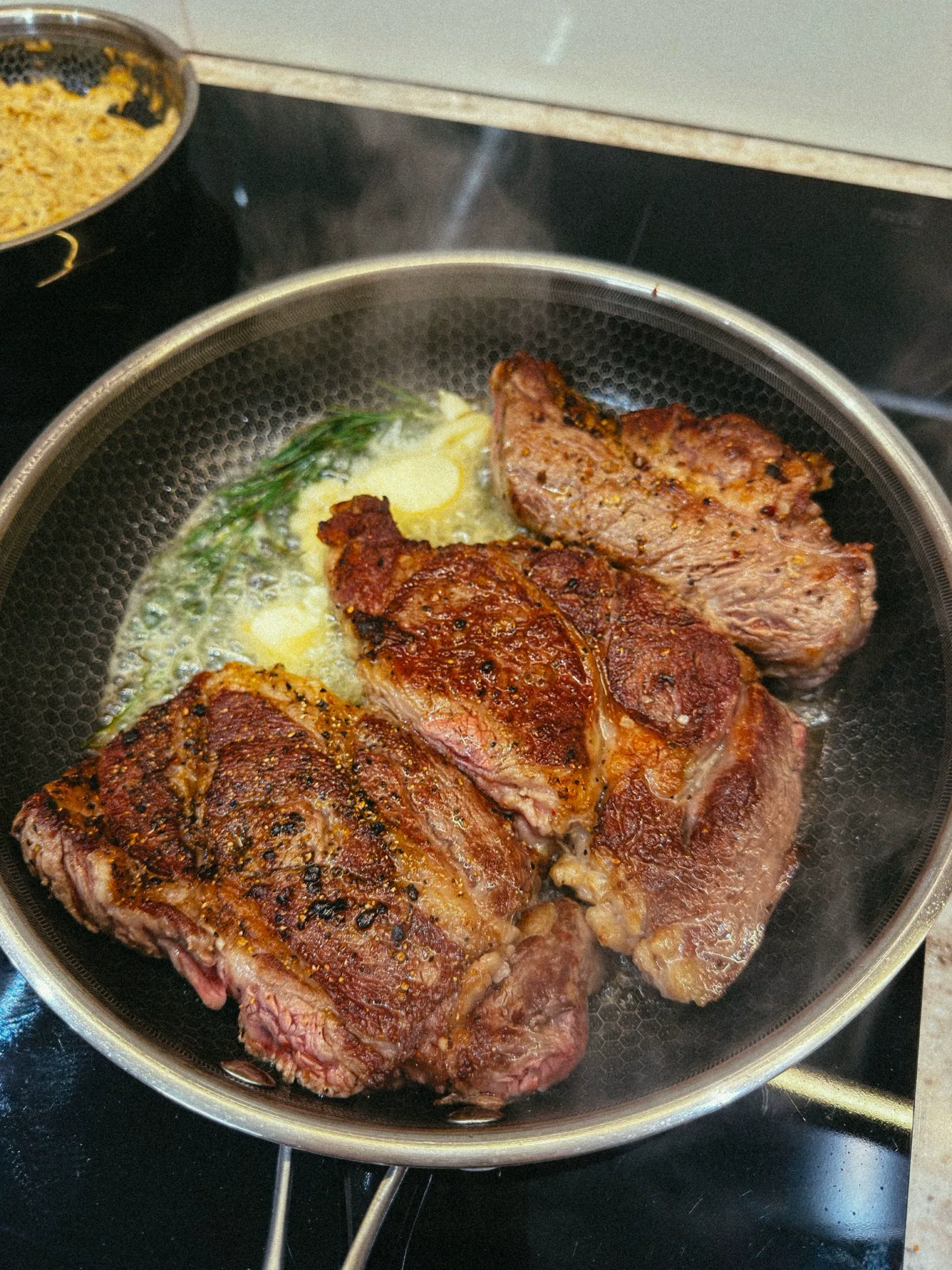
Teddy here, cub. There are few kitchen moments as satisfying as the sizzle of a good steak hitting a hot pan. But steak can feel intimidating: which cut, how long, why is it grey? Let’s take the fear out of it. With a few simple rules, you’ll cook a juicy, beautifully browned steak at home, and you’ll know how to make it part of a balanced plate.
Choose Your Cut
Different cuts suit different moods and budgets.
- Ribeye: marbled with fat, rich and juicy. Very forgiving for beginners.
- Sirloin: leaner, beefy flavour, great value. Best not cooked past medium.
- Fillet (tenderloin): the most tender and very lean, with a milder flavour. A special-occasion treat.
- Flank or skirt: thin, full of flavour, best cooked fast and hot, then sliced thinly across the grain.
- Rump: firm, flavourful and affordable.
Look for steaks about 2.5 to 3 cm thick. Thin steaks overcook before they brown.
Before You Cook
- Take it out of the fridge about 20 to 30 minutes before cooking, so it cooks more evenly.
- Pat it very dry with kitchen paper. A dry surface browns; a wet one steams and turns grey.
- Season generously with salt just before cooking (or well ahead, up to a day before, uncovered in the fridge). Add pepper after cooking or near the end, so it doesn’t burn.
The Pan Method
- Use a heavy pan, ideally cast iron or thick stainless steel.
- Get it really hot. Add a little high-heat oil, like rapeseed or sunflower, and wait until it just shimmers.
- Lay the steak away from you so hot oil doesn’t splash towards you.
- Don’t fiddle. Leave it for 2 to 3 minutes to build a crust, then flip.
- Flip a few times if you like. Turning every minute can give even cooking, so don’t worry about “only flip once”.
- Baste at the end. Add a knob of butter, a crushed garlic clove and a sprig of rosemary or thyme. Tilt the pan and spoon the foaming butter over the steak for the last minute.
Don’t forget the fat edge on cuts like sirloin: hold the steak upright with tongs and let the fat render for a minute until golden.
How Do You Know It’s Done?
A digital thermometer is the easiest way. Approximate internal temperatures in the thickest part:
- Rare: about 50°C
- Medium-rare: about 55°C
- Medium: about 60°C
- Well done: 70°C and above
Take it off the heat a couple of degrees early, because it keeps cooking while it rests.
Rest, Then Slice
Rest the steak on a warm plate or board for about 5 minutes, loosely covered with foil. Then slice across the grain, meaning across the long muscle lines, so every bite is tender. Pour any resting juices over the top. That’s liquid gold, cub.
Build a Balanced Plate
Steak is a great source of protein, iron, zinc and vitamin B12. Health organisations generally suggest keeping red meat to moderate amounts, so make it part of a colourful plate:
- A modest portion of steak, around the size of your palm, sliced and shared.
- Lots of veg: a crunchy green salad, grilled peppers, roasted tomatoes or garlicky greens.
- Something wholesome: new potatoes, a grain salad, or crusty bread.
- A fresh sauce: chimichurri with parsley, garlic, vinegar and olive oil is bright and zingy, and lighter than creamy sauces.
Quick Troubleshooting
- Grey and chewy: pan wasn’t hot enough or the steak was wet. Dry it and preheat longer.
- Smoky kitchen: open a window and switch on the fan. Searing is a little dramatic. So are we.
- Burnt outside, raw inside: heat too high for a thick steak. Sear, then finish in a 180°C oven for a few minutes.
Light the candles, pour something nice and enjoy your steak night at home. Warm. Protective. Teddy Bear.
Comments
Also give your opinion.

 The Captain Look






Leave a comment