

















Rails to Gains: The Beginner’s Guide to the Smith Machine, Babe
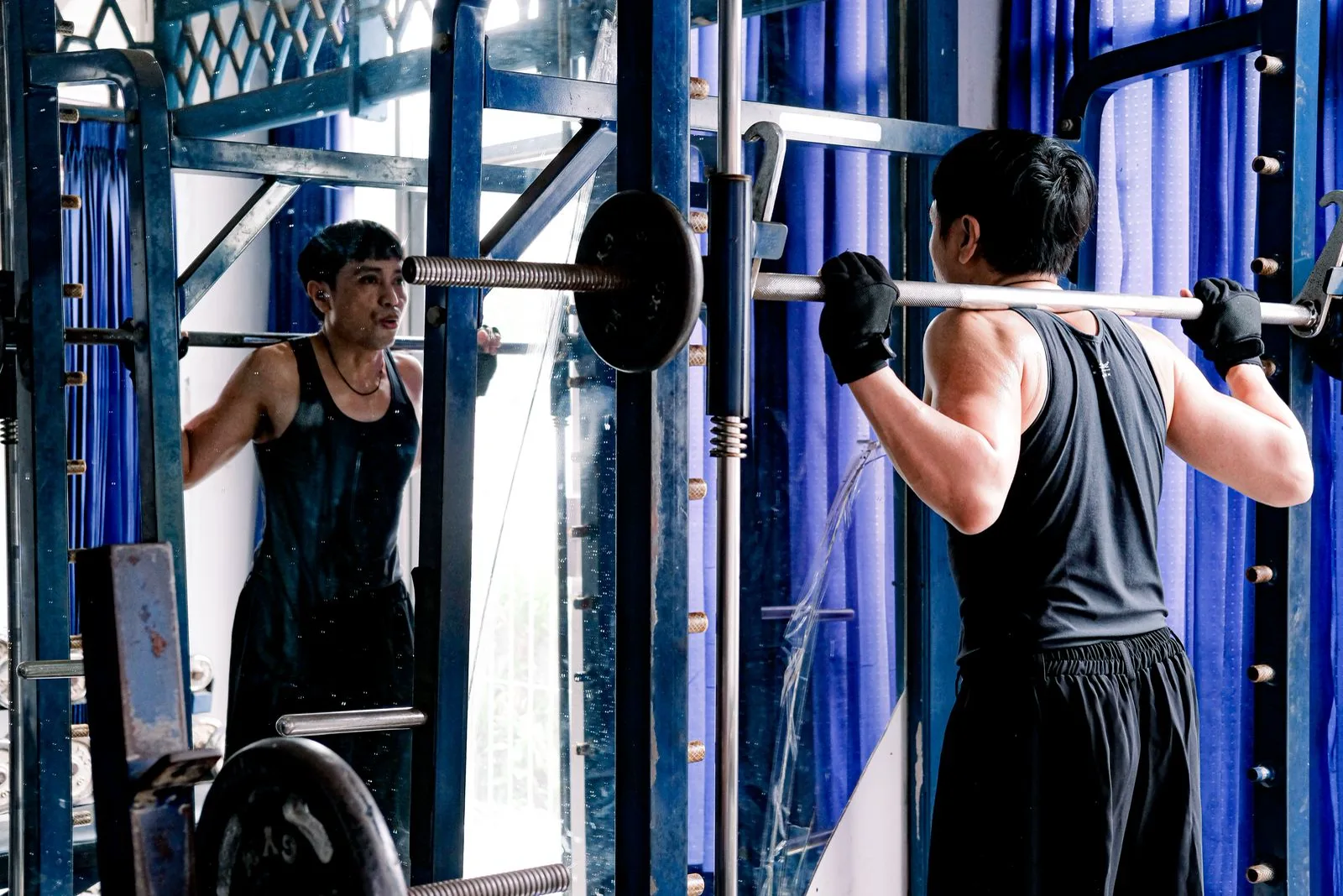
Babe, you’ve seen it in the gym: a barbell fixed between two steel rails, sliding up and down like a lift. It’s the Smith machine, and it’s one of the most misunderstood pieces of equipment on the floor. Some people swear by it, others roll their eyes. The truth? It’s a brilliant tool when you know how and when to use it. Let’s demystify it.
How It Works
On a Smith machine, the bar runs along vertical (or slightly angled) guide rails. It can only move up and down in a fixed path. Along the rails are hooks or slots. At any point, you can twist the bar with your wrists to lock it onto the nearest hook. There are also adjustable safety stops lower down that catch the bar if you can’t finish a rep.
The Pros
- Safety when training alone: you can rack the bar at any point with a twist of the wrist, and the safety stops catch it. No spotter needed.
- Stability: because the bar can’t wobble forwards or sideways, you can focus on pushing hard with the target muscles.
- Great for learning: beginners can practise a movement pattern with confidence before moving to free weights.
- Easy to set up: no unracking a heavy bar from a rack.
- Versatile: squats, presses, rows, lunges, calf raises, hip thrusts and more.
The Limits
- Fixed path: your body has to fit the bar’s path, not the other way round. Free weights let your joints move more naturally.
- Less stabiliser work: the small muscles that balance a free barbell do less work.
- Weight doesn’t translate exactly: the bar is often counterbalanced, so the starting weight may be lighter or heavier than a normal Olympic bar. Ask staff or check the label.
The smart approach: use the Smith machine as one tool in your kit, alongside free weights, not as a total replacement.
Before You Start
- Set the safety stops just below the lowest point of your movement.
- Check the hook direction. Practise locking and unlocking the bar with no plates first.
- Position yourself carefully relative to the bar. Small foot changes make a big difference on a fixed path.
- Start light and add weight as the movement feels smooth.
Four Moves to Try
Smith squat. Bar across your upper back, feet slightly in front of the bar, shoulder-width apart. Unhook, sit down and back until your thighs are around parallel, then drive up. Having your feet a little forward lets you sit back comfortably.
Smith bench press. Bench centred so the bar lowers to your mid-chest. Grip slightly wider than shoulders, unhook, lower with control to just above the chest, press up. Set the safety stops just above your chest height when the bar is at the bottom.
Smith split squat. Bar on the back, one foot forward and one back in a long stance. Lower the back knee towards the floor, then push up through the front heel. Brilliant for legs and glutes with less balance pressure.
Smith inverted row. Set the bar around hip height, lie underneath, grab it and pull your chest to the bar with a straight body. A friendly step towards pull-ups.
Sample Beginner Session
- Smith squat: 3 sets of 10
- Smith bench press: 3 sets of 10
- Smith inverted row: 3 sets of 8 to 10
- Smith split squat: 2 sets of 8 per leg
- Plank: 3 holds of 30 seconds
Rest about 90 seconds between sets. Choose a weight where the last two reps feel challenging but your form stays clean.
Gym Etiquette
Wipe the bar and bench after use, unload your plates and put them back where they belong. Ask if someone is using the machine before you jump in. Smith machines are popular for a reason.
Smooth rails, strong legs and a brand-new tool in your workout box. Sunshine and pop divas, babe. Gotta order more protein!
Comments
Also give your opinion.

 The Captain Look

Leave a comment