

















Your First Surf Lesson: The Captain’s Guide to Catching a Wave
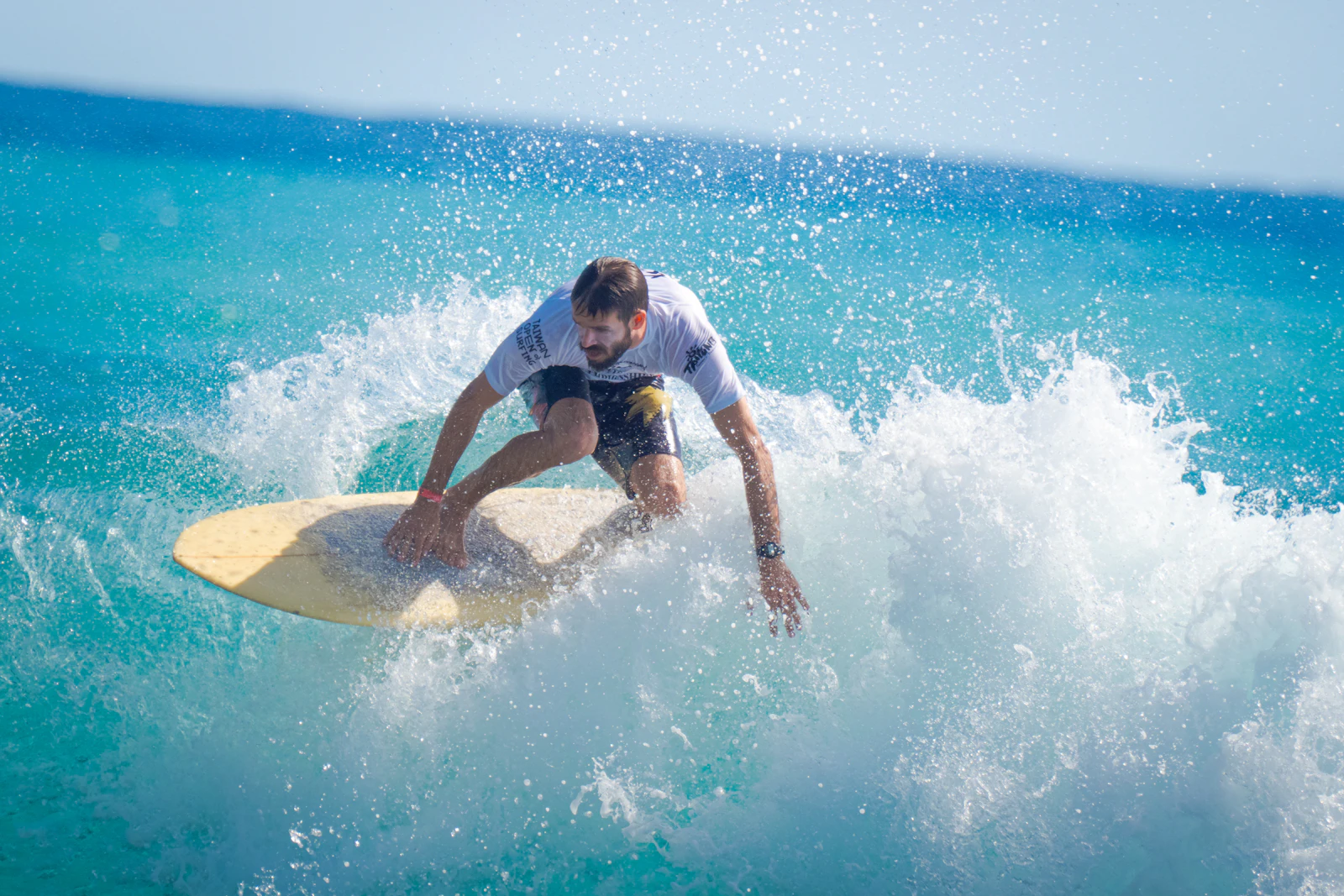
Few things in life feel as good as the first time a wave picks up your board and carries you towards the shore. Your Captain has watched countless sailors try surfing, and every single one came back to the beach grinning like a child. Here is how to make your first surf lesson the start of a lifelong love affair with the ocean.
Book a Lesson, Always
Your first time should be with a qualified instructor at a beginner-friendly beach. They know the conditions, the currents and the safest spots, and they provide the right board and wetsuit. Group lessons are fun and social; private lessons speed things up. Ask about instructor qualifications and lifeguard cover.
The Right Kit
- A big soft-top board: long, wide and foam-covered. Stable, floaty and forgiving when it bumps into you. And it will.
- A wetsuit fitted for the water temperature. It keeps you warm and adds a little buoyancy. Snug is right; baggy lets water flush through.
- A leash attached to your back ankle, so the board stays close.
- Water-resistant sunscreen on face, ears and neck, and a rash vest if it is sunny.
What Happens in a First Lesson
You start on the sand, learning how to lie on the board, paddle, and “pop up” to standing. Then you head into waist-deep white water, the broken foam after the wave has crashed, where you catch your first rides. No big waves, no deep water. Most beginners stand up at least once in their first session.
The Pop-Up in Three Steps
- Paddle: lie centred on the board, chest up, and paddle with long strokes as the wave approaches.
- Push: when you feel the board pick up speed, place your hands flat by your chest and push up like a push-up.
- Step: bring your front foot between your hands and your back foot behind, knees bent, arms out, eyes on the beach. Not on your feet!
Practise it twenty times on the sand. Then twenty more. It will feel silly; it will also work.
The Captain’s Ocean Rules
- Swim only at lifeguarded beaches and between the flags where they are used.
- Ask your instructor to point out rip currents. If you are caught in one, stay calm, hold your board, and paddle parallel to the shore until you are out of it.
- When you fall, fall flat and shallow, protect your head with your arms, and never dive head-first.
- Keep your board away from other people. A big foam board still hurts.
- Learn the basic etiquette: the surfer closest to where the wave is breaking has priority.
Be Patient With Yourself
Surfing is wonderfully humbling. You will fall, swallow water and get tumbled. You will also be exhausted, so eat well, drink plenty and do not plan anything strenuous afterwards. Book three or four lessons close together; progress comes fast when you keep the rhythm.
The ocean rewards those who return to it with a smile. Catch a wave, ride it to the sand, and feel that rush. Life is amazing, sailor. Paddle out.
Comments
Also give your opinion.

 The Captain Look






Leave a comment