

















Born of Fire: The Captain’s Guide to Black Sand and Volcanic Beaches
Ahoy, shipmates. Your old captain has dropped anchor off golden beaches, white beaches and even pink ones, but nothing stops the heart quite like stepping onto a shore of jet-black sand. Volcanic beaches feel like another planet: dark glittering grains, sculpted lava rock and turquoise water that looks almost electric against the black. Life is amazing, and these beaches prove it.
Why Some Beaches Are Black
Black sand is born of fire. When lava flows meet the sea, the molten rock cools fast and shatters, and waves grind it down into fine dark grains over time. Other black beaches form as the ocean slowly erodes old volcanic cliffs. That is why you find them on volcanic islands and coasts: the Canary Islands, the Azores, Iceland, Hawaii, Santorini, parts of Bali and the Pacific coast of Central America, to name a few.
Some volcanic beaches are fine and soft like cocoa powder, others are pebbly, and some glint green or silver in the sunshine thanks to the minerals inside.
The Hot Sand Rule
Here is the captain’s number one warning: dark sand soaks up sunshine and gets far hotter than pale sand. By midday it can be properly toasty underfoot.
- Wear sandals or water shoes right down to the waterline.
- Bring a thick towel or mat, not just a thin sarong.
- Pick your hours. Mornings and late afternoons are kinder to feet and skin.
- Shade is gold. Pack or rent a parasol, because there are rarely trees on lava shores.
Lava Rock Coves and Natural Pools
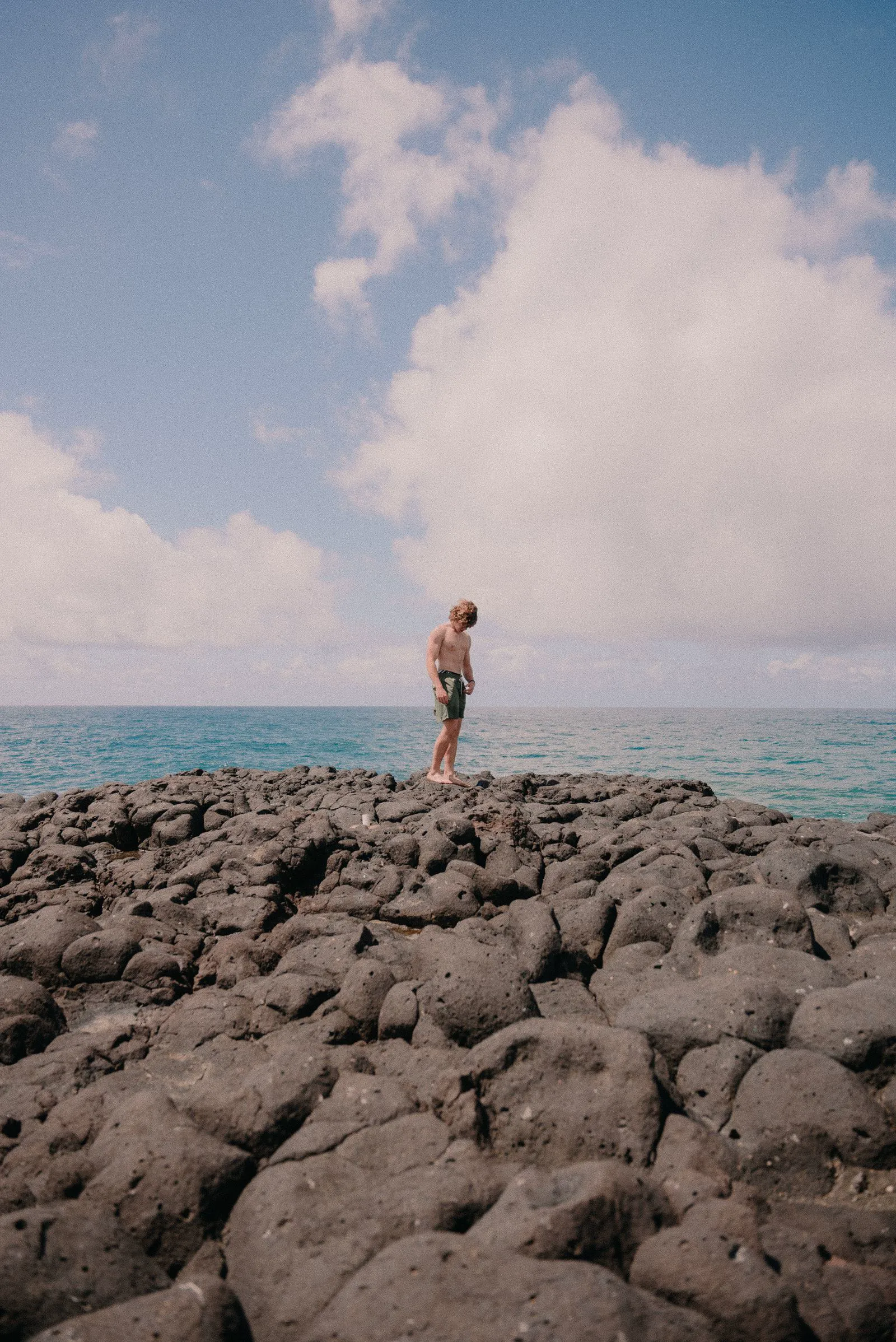
The magic of volcanic coastlines is not only the sand. Look for natural rock pools, where the sea washes into basins carved by old lava. Many islands have turned some into gorgeous swimming spots with steps and ladders, filled by the tide and sheltered from the waves.
- Only swim in pools that are known swimming spots and when the sea is calm.
- Lava rock is sharp and can be slippery: water shoes are your best friend here too.
- Watch for waves washing over the outer edge, and never turn your back on the ocean.
- Peek gently at the little crabs, fish and anemones, but leave them where they live.
Swimming Off a Black Beach
Volcanic beaches often shelve steeply, meaning the water gets deep quickly, and some face the open ocean with strong waves and currents. Respect the flags, swim where lifeguards are on duty and ask locals which spots are safe. The sea here is beautiful and powerful in equal measure.
Pack Like a Captain
- Reef-safe sunscreen, sunglasses and a hat: the dark sand reflects less, but the sun is still fierce.
- Plenty of water and a snack, as many wild black beaches have no kiosk.
- Snorkel and mask: the dark seabed makes fish flash brightly.
- A small brush or extra towel. Black sand clings, and you will find it in your bag for days.
Gorgeous Photos on Black Sand
Black beaches are a photographer’s dream. White surf against dark sand makes dramatic lines, and a bright swimsuit or shirt pops like nothing else. Shoot low to catch the glitter of the grains, and try a golden-hour portrait with the sea behind you. Your followers will think you have landed on the moon.
Leave It as You Found It
Many volcanic beaches are protected, and taking sand, pebbles or lava rock home is often forbidden. Take photos and memories instead, and carry every scrap of rubbish back with you.
So next time you plan an island escape, steer towards a coast born of fire. Fair winds, sunny skies, and remember: life is amazing.
Comments
Also give your opinion.

 The Captain Look






Leave a comment