

















Up on the Water: The Captain’s Guide to Your First Time Water Skiing
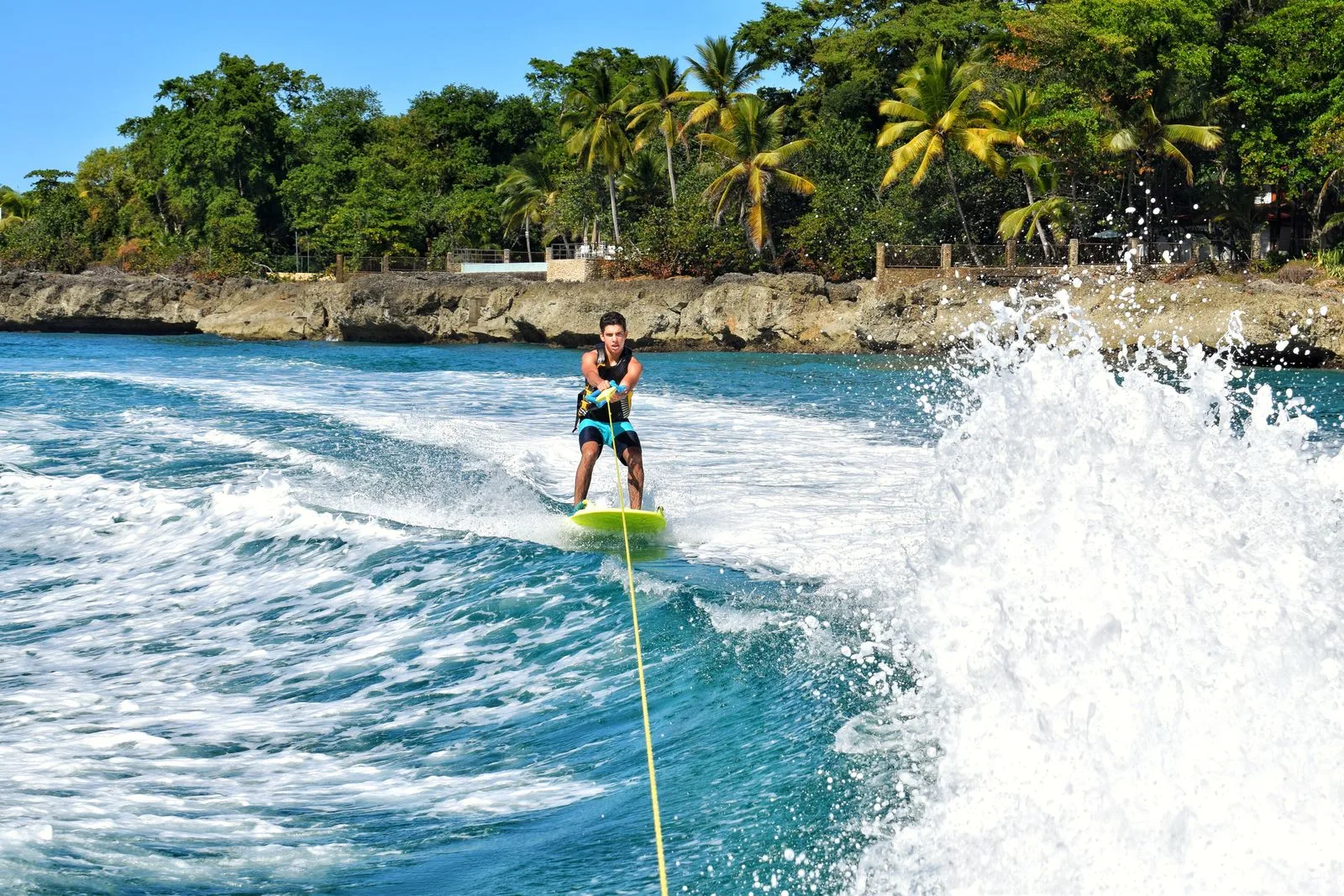
Ahoy, shipmates. Cruz del Mar here. There is a moment every water skier remembers: the rope tightens, the boat roars, you rise out of the water, and suddenly you are gliding across the sea like a son of Poseidon. Water skiing looks daring, but with good teaching, most beginners stand up within a session. Today, your old captain shows you how. Life is amazing, especially at speed.
What You Need
Most water-ski schools and resort watersports centres provide everything:
- Skis: beginners use two wide skis for stability.
- A life jacket: always, without exception. It keeps you floating while you wait and makes the deep-water start much easier.
- A tow rope with a handle.
- A boat, a driver and a spotter: the spotter watches you at all times and tells the driver when you fall.
You need to be comfortable in deep water. Swimming skills plus a life jacket make it relaxing rather than scary.
Start on Dry Land
A good instructor will first practise the position on the beach or the jetty. Sit on the sand with skis on, hold the handle and let the instructor pull you gently up. It feels a little silly, shipmates, but it builds the muscle memory you need.
The Deep-Water Start
This is the key moment. Here is the classic position:
- Lean back in the water as if sitting in an invisible chair, letting the life jacket float you.
- Knees to chest, with skis pointing up and the tips just out of the water, about shoulder-width apart.
- Arms straight, holding the handle outside your knees, with the rope running between the skis.
- Say “hit it” (or the signal your school uses) when ready.
- Let the boat pull you up. Do not try to stand by pulling with your arms. Stay curled and patient until the skis are planing on the surface.
- Slowly rise. As you come up, gradually straighten your legs while keeping your knees soft and arms straight.
The most common beginner mistake is standing up too early. Patience, sailor.
Riding Position
- Knees slightly bent, like a skier on snow.
- Weight centred over your feet, leaning back a touch.
- Arms straight and relaxed, the handle near your hips.
- Look at the horizon, not at your skis.
Small, smooth movements keep you steady. Big wobbles usually start with a bent arm or a bent waist.
Hand Signals
Agree on signals with your driver and spotter before you start. Common ones include:
- Thumb up: faster.
- Thumb down: slower.
- Flat hand slicing across the neck: stop.
- Pat on the head: back to the dock.
- Clasped hands over your head after a fall: “all good”.
That last one is important. After every fall, show the boat you are fine.
How to Fall Gracefully
Everyone falls. It is part of the fun.
- Let go of the handle. Never hang on while being dragged.
- Fall backwards or sideways, relaxing into the water.
- Signal you are okay and wait. The boat will circle back to you, so stay put and hold up a ski if asked, so other boats can see you.
Choosing a Good School
- Look for qualified instructors and well-kept equipment.
- Calm, sheltered water and good weather make learning much easier, ideally a sunny morning when the sea is flat.
- A boat with a spotter on board is essential.
- Ask about beginner packages with several short runs.
After Your First Ride
Your arms, back and thighs will feel it the next day. Stretch, drink plenty of water and celebrate with a sunset drink by the water. Before long, you might try crossing the wake or dropping one ski.
Up you get, shipmates. Trust the boat, stay patient and let the sea carry you. Life is amazing.
Comments
Also give your opinion.

 The Captain Look






Leave a comment