

















Catch the Breeze: The Captain’s Guide to Your First Windsurfing Lesson
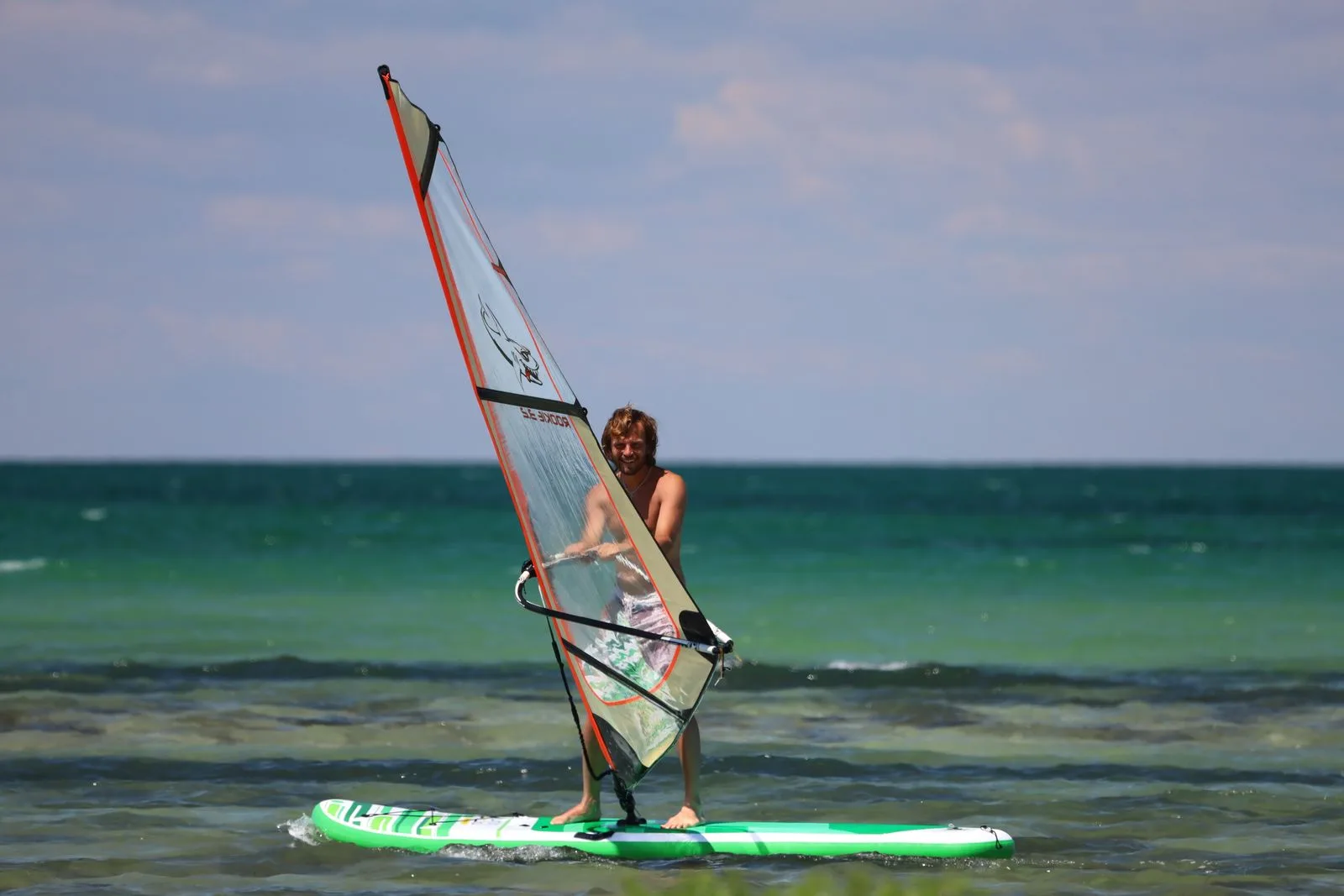
Ahoy, sailor! Windsurfing is sailing in its most personal form: just you, a board, a sail and the wind. There’s a magical moment in every first lesson when the sail fills, the board starts to glide and you realise you’re actually moving across the water on the power of the breeze. The captain wants that moment for you. Here’s how to get there.
Why Windsurfing Is Worth a Try
- It’s real sailing. You learn how wind works, how to steer and how to read the water. Skills that help on any boat.
- Full-body fun. Legs, core, arms and back all join in, and your balance improves quickly.
- Peaceful and thrilling. Calm cruising on a gentle day, exhilarating speed when you progress.
- Social. Windsurf schools and beaches are friendly places, full of people who love the sun and the sea.
Where and When to Learn
- Take lessons at a proper school. An instructor will teach you safely, provide the right equipment and pick the right conditions. Most offer beginner courses over a few days.
- Look for flat, shallow water. Sheltered bays, lagoons and lakes with sandy bottoms are ideal. You can stand up when you fall, which takes the stress out of learning.
- Light, steady wind is your friend. Strong wind is for later. Schools choose beginner days carefully.
- Warm water helps. Sunny destinations make the whole experience more pleasant, and you’ll be in and out of the water a lot.
What to Wear and Bring
- Swimwear, plus a rash vest or a wetsuit (schools often provide wetsuits).
- Water shoes if the bottom is rocky.
- Water-resistant sun cream, a cap with a strap, and sunglasses with a retainer cord for breaks on the beach.
- Water and a snack: windsurfing burns energy fast.
- A buoyancy aid: most schools provide one for beginners. Wear it.
Your First Lesson: What to Expect
- Land drill first. You’ll practise on a simulator board on the sand, learning how to stand, pull up the sail and hold it.
- The uphaul. On the water, you’ll lift the sail out of the water with a rope while standing on the board, using your legs, not your back.
- The secure position. Standing on the board with the sail upright and loose in front of you. This is your “pause” position whenever you feel unsure.
- Sailing away. Turning the sail, gripping the boom (the handle bar around the sail) and letting the wind fill it. Lean back slightly, keep your arms fairly straight and look ahead.
- Turning around. You’ll learn a simple turn by walking around the front of the mast, so you can sail back to where you started.
Beginner Tips From the Captain
- Use your legs, not your arms. Bent knees and a straight back make everything easier.
- Look where you want to go, not down at your feet.
- Small adjustments. Gentle movements with the sail are better than big pulls.
- Let go when you lose balance. Drop the sail and fall away from it, ideally backwards into the water.
- Rest often. Your grip and shoulders tire quickly at first.
- Laugh at the falls. Everyone falls. Many, many times. It’s part of the joy.
Safety on the Water
- Never go out alone while learning, and stay in the area your school shows you.
- Know the wind direction. Beginners should avoid offshore winds that blow away from the beach.
- Stay with your board if you get tired; it floats and keeps you visible.
- Learn the “help” signal your school teaches, usually waving your arms above your head.
- Respect swimmers and other water users. Keep your distance.
After Your Course
Once you can sail back and forth and turn around, you can rent equipment at many beach schools, join group sessions and keep progressing. Many people find their favourite holiday spots through windsurfing, following the sunny, breezy beaches of the world.
Feel the breeze, trust the sail and let the sea carry you. Life is amazing, sailor. Your first glide is waiting.
Comments
Also give your opinion.

 The Captain Look





Leave a comment