

















Written in the Stars: The Captain’s Guide to Navigating Like the Old Sailors
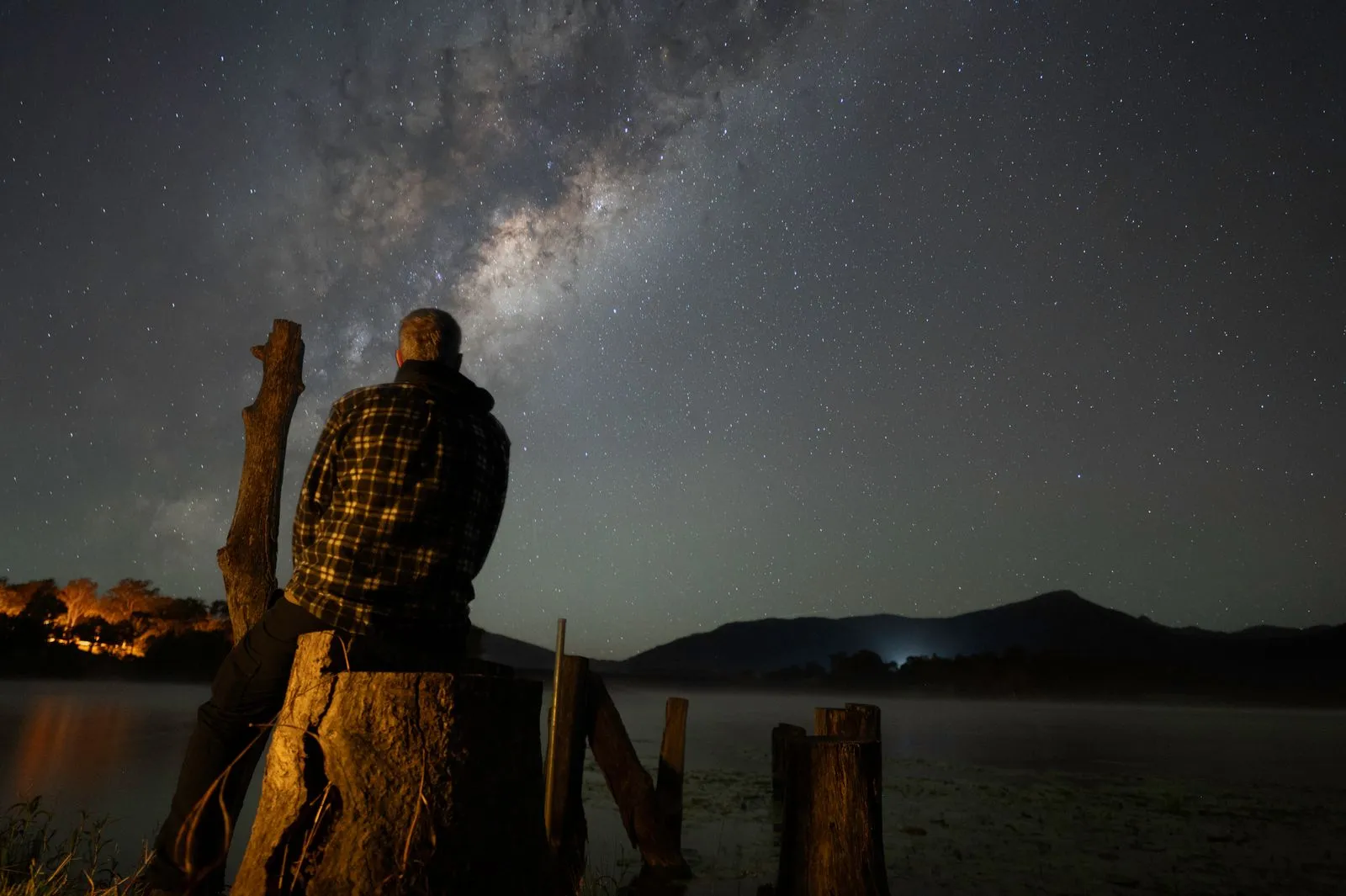
Cruz del Mar here, your Captain. Long before phones and satellites, sailors crossed whole oceans by reading the sky. The sun by day, the stars by night: they were the original map. Today, learning a few of their tricks makes every clear night on a beach, a boat or a hilltop more magical. And knowing how to find north without a screen is a quietly powerful feeling.
Why the Stars Worked
As the earth turns, the stars appear to move across the sky together, rising in the east and setting in the west. But a few key stars and patterns stay reliable enough to point the way. Sailors learned them like old friends, and so can you.
Northern Hemisphere: Find the North Star
- Find the Big Dipper, also called the Plough: seven bright stars shaped like a saucepan with a handle.
- Look at the two stars that form the outer edge of the pan, opposite the handle. These are the "pointer stars".
- Follow the line they make upwards, about five times the distance between them.
- You arrive at Polaris, the North Star. It is not the brightest star in the sky, but it sits almost exactly above the North Pole and barely moves. Face it, and you are facing north.
Bonus captain's trick: the height of Polaris above the horizon roughly matches your latitude. Sailors used that to know how far north they were.
Southern Hemisphere: The Southern Cross
In the south there is no bright pole star, so sailors use the Southern Cross, a small kite-shaped group of four bright stars.
- Find the Southern Cross and its two bright "pointer" stars nearby.
- Extend the long axis of the cross about four and a half times its length.
- Draw a line from between the two pointer stars that meets your first line.
- Drop straight down from that meeting point to the horizon. That direction is roughly south.
Rising and Setting Stars
Polynesian navigators, some of the greatest sailors in history, used a "star compass": they memorised where specific stars rose and set on the horizon. Watch a bright star near the horizon early in the night and later on, and you will see it moving from east towards west.
Best Conditions for Stargazing
- Get away from city lights: beaches, boats and countryside are ideal.
- Check the moon: a bright full moon washes out fainter stars.
- Let your eyes adjust: give it 15 to 20 minutes without looking at your phone. If you need light, use a red torch.
- Use an app to learn, then put it away: star apps are brilliant teachers, but the magic is in finding them yourself.
Respect Old Skills, Use Modern Safety
Star navigation is a wonderful skill and a lovely party trick, but on real trips always carry proper navigation tools, charts and a charged phone, and follow your skipper's lead.
Look up, sailor. The same stars that guided the old ships are shining for you. Life is amazing.
Comments
Also give your opinion.

 The Captain Look






Leave a comment