

















Tie It Like a Sailor: The Captain’s Guide to Five Essential Knots
Ahoy, shipmates. Every sailor we have ever trusted could tie a good knot without looking, and that’s no accident. Knots are the quiet language of the sea: they keep boats at the dock, sails where they belong and your dignity intact when someone throws you a line. Learn these five and you’ll feel at home on any deck, from a little dinghy to a proper yacht.
Before You Start: Speak a Little Rope
A few words make every knot easier to learn:
- The working end is the loose end you move around to tie the knot.
- The standing part is the rest of the rope, the part that takes the load.
- A bight is a U-shaped fold in the rope.
- A loop is where the rope crosses over itself.
Practise with a soft rope about an arm’s length or two, on the sofa, at the beach, waiting for coffee. Knots are muscle memory. Tie each one ten times, then ten more with your eyes closed.
1. The Bowline: The King of Knots
The bowline makes a fixed loop at the end of a rope that won’t slip or tighten, yet comes undone easily even after a heavy load. Use it to drop a loop over a post or tie a line to a ring.
- Make a small loop in the standing part, with the working end lying on top.
- Bring the working end up through the loop from underneath (“the rabbit comes out of the hole”).
- Take it around behind the standing part (“around the tree”).
- Send it back down through the small loop (“back into the hole”).
- Hold the working end against the side of the big loop and pull the standing part to tighten.
Leave a decent tail, about a hand’s width. A bowline with a stubby tail is a bowline with ambitions to escape.
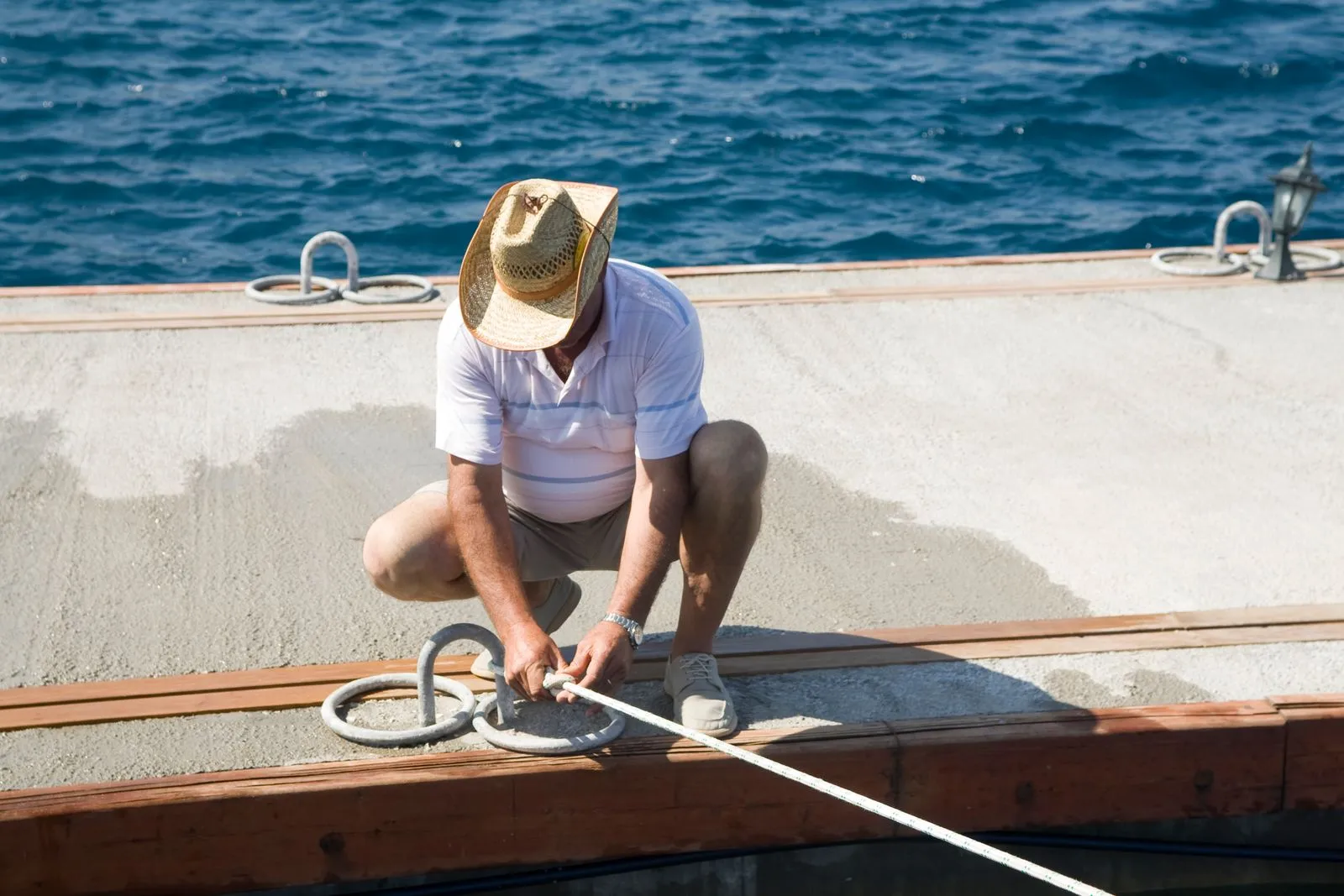
2. The Cleat Hitch: Park the Boat With Style
Cleats are the horn-shaped fittings on docks and decks. The cleat hitch is how you tie up neatly and quickly.
- Take the rope once around the base of the cleat, starting at the far horn.
- Cross over the top to make a figure-eight around both horns.
- Finish with an underhand loop (a twist that makes the rope lie flat) hooked over a horn.
Done right, it looks tidy and parallel. One figure-eight and the locking turn are enough. A cleat wrapped like a birthday present is the sign of a nervous crew, darling.
3. The Figure-Eight: Your Stopper Knot
Tie a figure-eight in the end of a line so it can’t run out through a pulley or fitting. It’s simple and very forgiving.
- Make a loop near the end of the rope.
- Take the working end around behind the standing part.
- Pass it down through the loop and pull tight. It should look like the number 8.
4. The Clove Hitch: Quick and Handy
The clove hitch ties a rope to a pole or railing in seconds. Lovely for hanging fenders, the soft bumpers that protect the hull.
- Wrap the rope around the rail once.
- Cross over the first turn and wrap around again.
- Tuck the working end under the second wrap and pull.
It can loosen if the load moves about, so for anything important add a half hitch on top or choose a different knot.
5. The Reef Knot: Joining Two Ends
The reef knot (or square knot) ties two ends of the same rope together, traditionally used when tucking away part of a sail. Remember “right over left, then left over right”. If it looks lopsided, you’ve tied a granny knot, which jams or slips. Untie and try again. Never use a reef knot to join two ropes that carry a heavy load.
Make It Stick
- Learn one knot a week and use it in real life: tie up a beach bag, hang a hammock, secure a bike rack.
- Ask the skipper. On any boat trip, crews love showing off a knot. Ask, watch and then try.
- Check every knot after you tie it. Tidy, snug and with a good tail is the goal.
- Book a beginner sailing day and your new knots will suddenly make perfect sense.
The Captain’s Last Word
A sailor with good knots is a sailor others trust, and there’s real joy in feeling a rope do exactly what you asked. Practise on dry land, show off on deck, and soon the whole crew will be asking you for help. Life is amazing out there, shipmate. Now go tie something beautiful.
Comments
Also give your opinion.

 The Captain Look





Leave a comment