

















Swimming With Sea Turtles: The Captain’s Guide to a Respectful Encounter
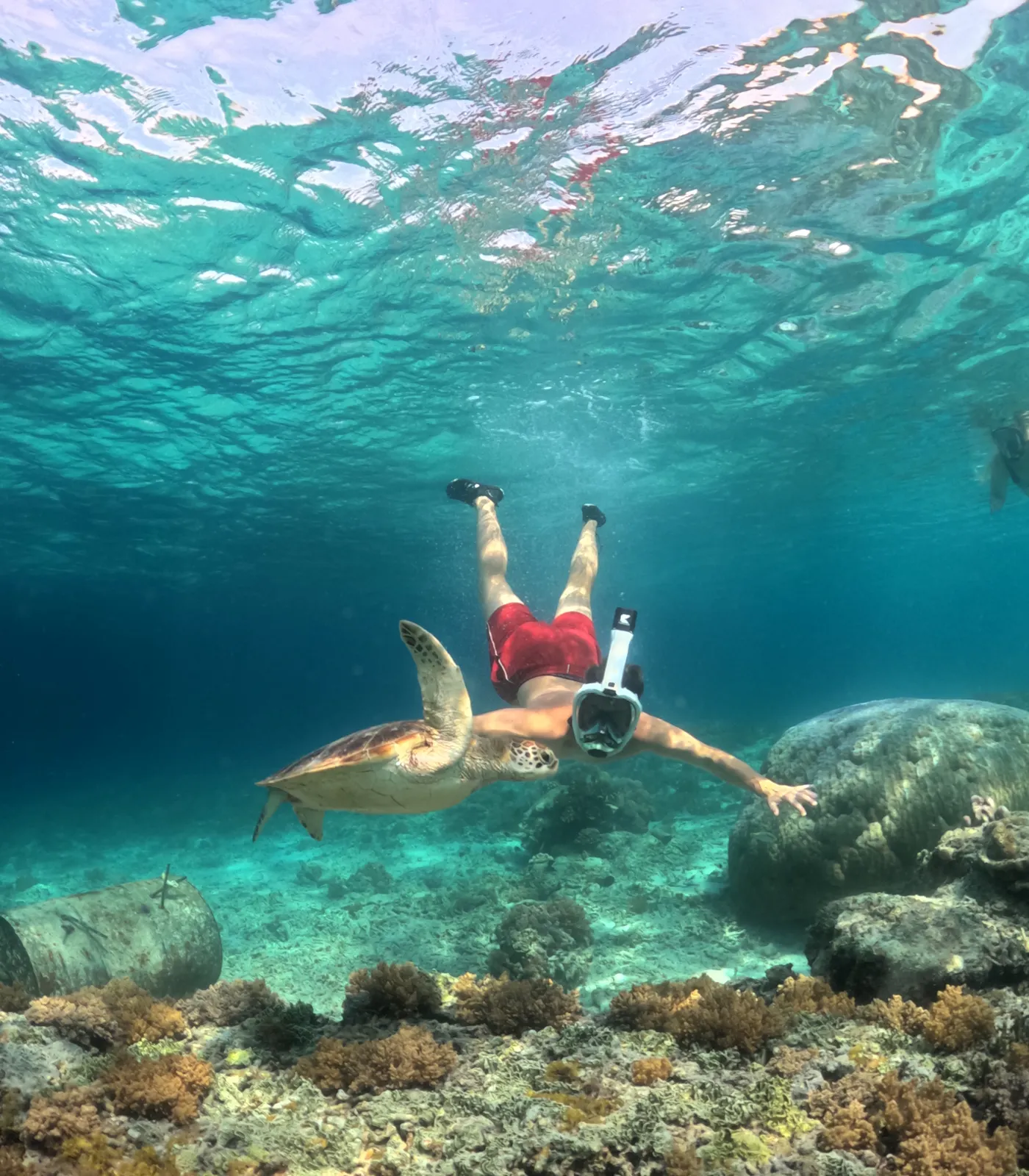
Ahoy, sailors. Few moments at sea come close to this one: you’re floating over warm, clear water, the sun dancing on the sand below, and a sea turtle glides past as if it owns the ocean. Because it does. Swimming near these ancient travellers is pure magic, and like all magic it comes with a few rules. Here’s how your old captain does it with respect.
Where Turtles Like to Hang Out
Sea turtles love calm, shallow bays with seagrass to graze on and reefs where they rest and get cleaned by little fish. They often feed close to shore in the morning and late afternoon, and many popular snorkelling spots around the world have resident turtles that return to the same patches day after day. Local dive shops and boat skippers know exactly where to look, so ask them. They’ll also know which areas are protected and which beaches are nesting sites to avoid.
Choose Your Guide Wisely
A good operator makes all the difference, for you and for the turtles. Look for one that:
- Keeps groups small and briefs everyone on behaviour before getting in the water.
- Never feeds, chases or handles the animals.
- Doesn’t promise “guaranteed” close-ups. Wild animals don’t do appointments.
- Moors carefully or drifts instead of dropping anchors on coral and seagrass.
- Supports local conservation, beach clean-ups or turtle rescue projects.
The Golden Rules in the Water
- Keep your distance. A few metres is the sweet spot. Let the turtle decide whether to come closer.
- Never touch. Not the shell, not the flippers, not a gentle stroke. Touching stresses them and can spread infections.
- Don’t block the way up. Turtles breathe air. If one is heading to the surface, move aside and give it a clear path.
- No chasing. If it swims away, enjoy the view of its departure and let it go.
- Stay calm and quiet. Slow, smooth movements, no splashing, no kicking near their heads.
- One turtle, a few visitors. If a crowd gathers, hang back and wait your turn, or move on to find your own quiet moment.
- No flash photography close to their eyes.
Gear That Helps
- A mask that fits well so you’re not fiddling and flailing.
- Fins for smooth, gentle propulsion that keeps you away from the reef.
- A rash vest for sun protection on your back during long floats.
- A reef-friendly sunscreen applied well before you get in, or rely on covering up instead.
- A floatation vest or noodle if you’re not a strong swimmer. Being relaxed in the water means fewer accidental kicks.
Protect Their Home Too
- Don’t stand on coral or seagrass. Float or swim over them.
- Take every bit of rubbish back to shore, and pick up stray plastic if you see it. Turtles often mistake plastic bags for jellyfish.
- On beaches, keep away from marked nesting zones and never shine lights at hatchlings.
Capture the Moment Without Stealing It
An underwater camera or a phone in a waterproof case is lovely, darling, but don’t let the screen become the whole experience. Take a few shots from a respectful distance, then put the camera down and just watch. The way a turtle turns in the light, slowly and peacefully, is something you’ll remember far longer than a photo.
Captain’s Closing Words
Swimming near a sea turtle is a reminder of how old and wise the ocean is, and how lucky we are to visit. Go with a good guide, keep your hands to yourself, give them space and float gently. Do that, and the sea will reward you with moments of pure wonder. Life is amazing, sailors. See you in the blue.
Comments
Also give your opinion.

 The Captain Look






Leave a comment